Targeting Institutional Readiness and Aligning Decisions with Future Requirements

Targeting Institutional Readiness and Aligning Decisions with Future Requirements

Launch of the Leadership Forum for Future Readiness under the National Programme “Ertiqaa”

Al Sheidhani: “The Leadership Forum for Future Readiness reflects maturity in the experience and a commitment to building a digital transformation that supports sustainable institutional impact.”

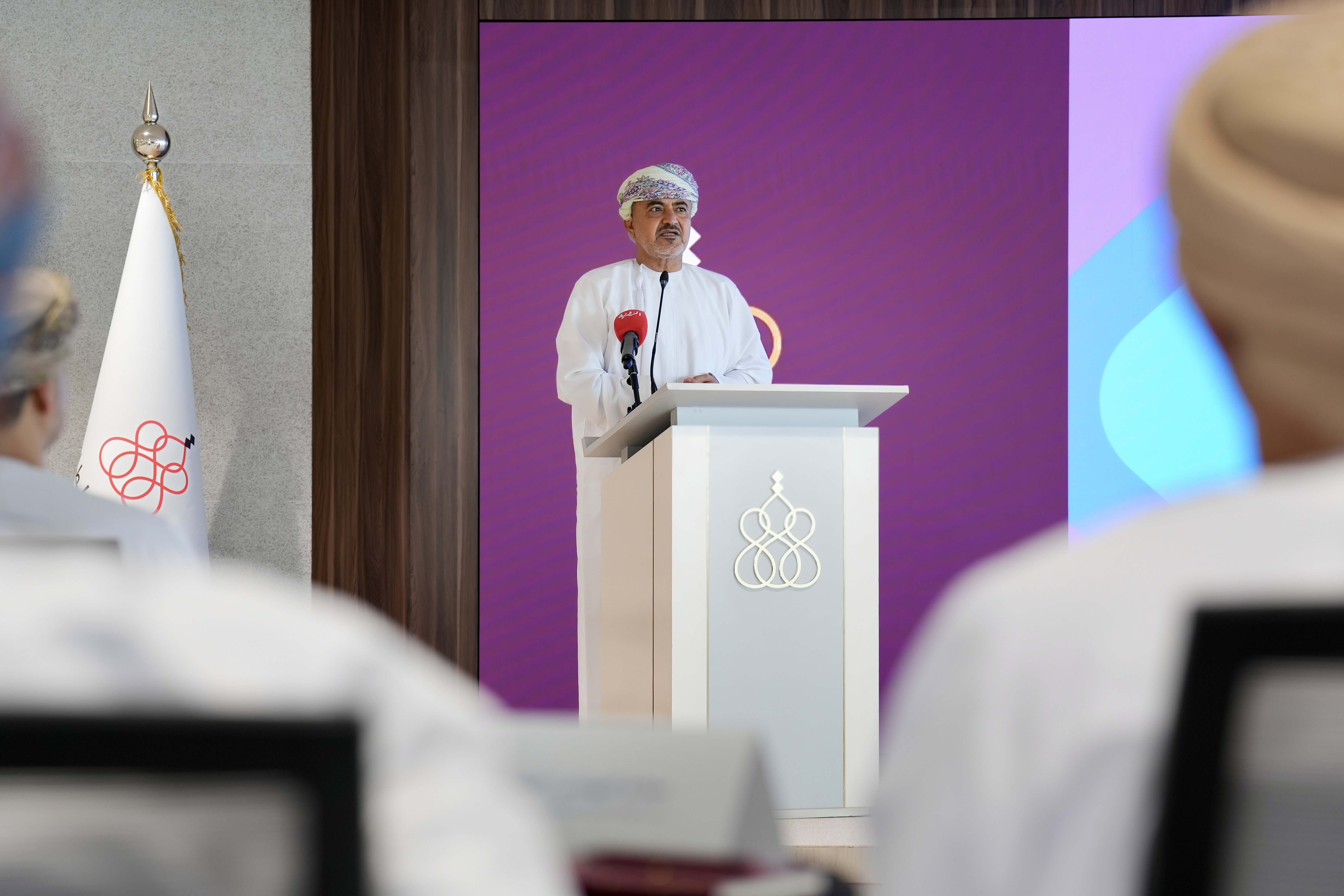
Muscat, February 2026 In line with accelerating digital change and national efforts to reshape government priorities while placing readiness at the heart of leadership decision-making, the Leadership Forum for Future Readiness was launched today under the National Programme “Ertiqaa”. The four-month forum brings together a select group of senior government leaders and decision-makers in a national initiative that underscores the priority of building institutional readiness to lead the future and accelerate government digital transformation, in alignment with the objectives of Oman Vision 2040.

Organised by the Ministry of Transport, Communications and Information Technology, in strategic partnership with the Royal Academy of Management, the University of Technology and Applied Sciences, and the Omani Society for Human Resource Management (OSHERM), the forum serves as a high-level dialogue platform for national leaders. It goes beyond traditional training frameworks to realign government decisions with future requirements and reflects an institutional approach that places leadership at the core of digital transformation. This contributes to building an integrated national leadership system characterised by flexibility and innovation, strengthening Oman’s ability to respond to rapid global digital developments and enhancing future readiness.

His Excellency Dr. Ali bin Amer Al Sheidhani, Undersecretary of the Ministry of Transport, Communications and Information Technology for Communications and Information Technology and Chair of the Technical Committee of the National Programme for Government Digital Transformation (Tahawul), said: “Digital transformation is no longer a secondary activity. It is a strategic direction led by senior leadership as the primary driver of the journey towards the future. What we witnessed at the Leadership Forum for Future Readiness is a practical expression of this approach, where leadership steps forward not only to keep pace with change, but to shape it.”

He added: “This forum reflects strong institutional awareness of the importance of readiness as a strategic pillar in Oman’s journey towards the future. It also confirms that sustaining institutional impact depends on aligning government visions and strengthening coherence among decision-makers. Bringing together such a diverse group of leaders in a shared dialogue space reflects the maturity of the Omani experience and its serious commitment to building a digital transformation that enhances readiness, anticipates challenges, and responds to rapid digital change through strategic guidance.”

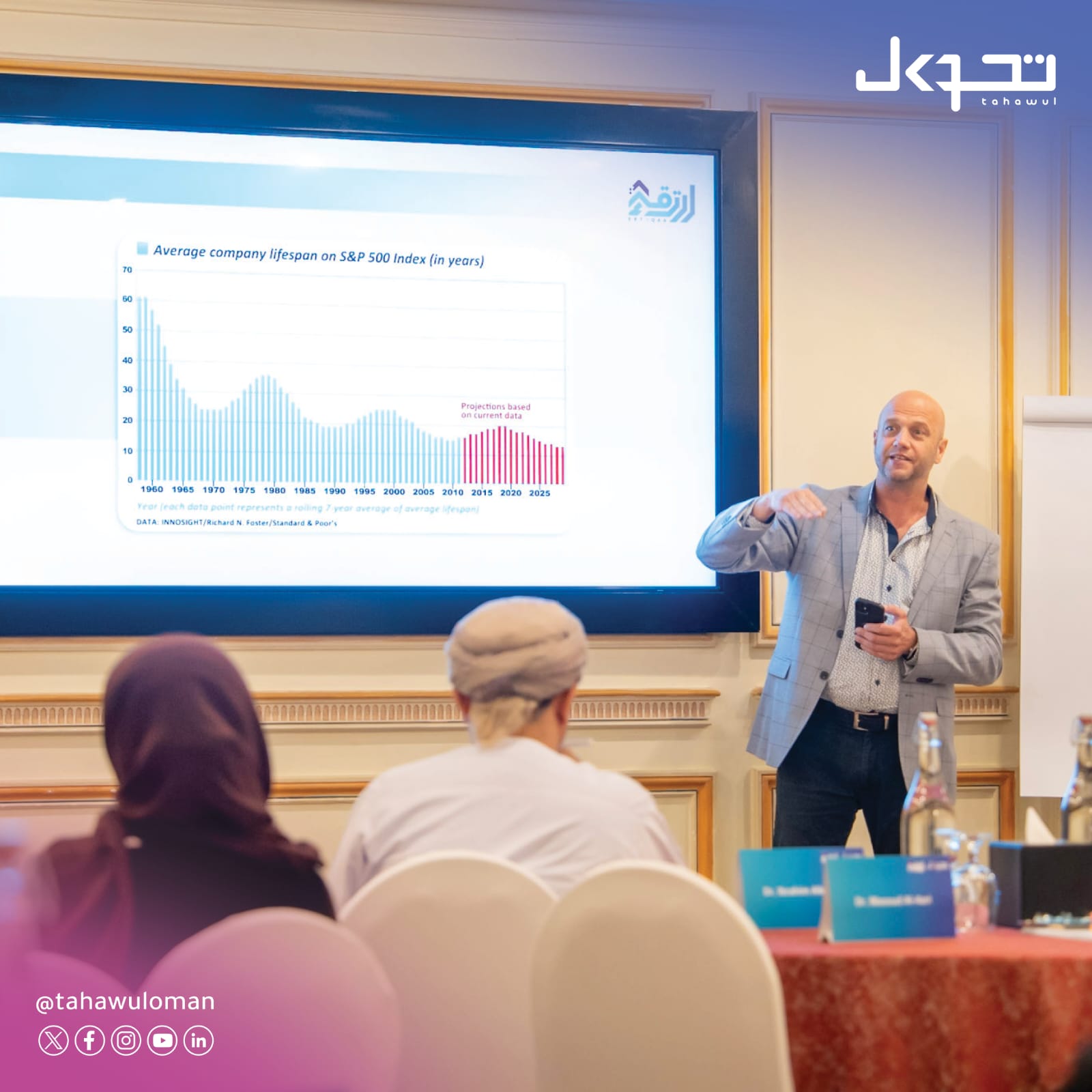
The forum aims to develop a shared understanding of digital transformation and emerging technologies, enabling a unified vision for advanced technologies, risk management, improved institutional performance, and the adoption of a one-government approach. It also seeks to strengthen coordination and integration across government entities and promote collective responsibility to achieve national outcomes. The programme will be delivered through a series of high-level sessions and meetings, including strategic discussion panels, leadership dialogues with global experts, case studies, practical applications, and interactive simulations.

The forum provides a strategic space for senior leadership alignment around a unified national direction and accelerates the impact of digital transformation as a leadership-driven decision that supports sustainable institutional outcomes. It presents readiness as an institutional capability and a government vision that strengthen leadership cohesion, support strategic direction-setting, and reinforce the role of government leadership in shaping Oman’s digital future, translating vision into lived national impact.

Within the Integrated National Path of the Tahawul Programme

Within the Integrated National Path of the “Tahawul” Programme

Accelerated Digital Momentum and Qualitative Packages of Digital Projects and Initiatives in North and South Al Sharqiyah Governorates during 2025

Completion of 21,555 digital transactions by the end of November in North Al Sharqiyah

Completion of 12 digital projects and the digitalisation of 14 services in South Al Sharqiyah

Muscat: January 2026

In a scene reflecting the accelerating pace of institutional transformation and the growing maturity of the digital experience across the North and South Al Sharqiyah Governorates, both continue to advance along the path of government digital transformation. During 2025, both governorates achieved tangible and qualitative progress, reflected in a focused package of digital projects and initiatives, alongside a systematic expansion of service automation. This progress aligns with the objectives of the National Government Digital Transformation Programme (Tahawul) and the strategic directions of Oman Vision 2040 towards an integrated digital government that meets community aspirations and supports comprehensive development pathways.

Digital Transformation in North Al Sharqiyah

As an indicator of the expanding effective use of electronic services in North Al Sharqiyah Governorate, Dr Badr bin Saif Al Hatmi, Head of the Digital Transformation Team, stated that the number of transactions completed through the governorate’s digital channels reached 21,555 during the period from January to November 2025. Digitalisation efforts transformed 14 external services and 11 internal services into an automated digital system, enhancing institutional efficiency, improving service quality, and establishing a more flexible operational environment that responds to beneficiaries’ needs.

Dr Al Hatmi added that, during the same period, the governorate implemented a package of digital projects and initiatives, most notably the preparation of the governorate’s digital strategy and the institutional digital architecture document. This included implementing virtual reality projects for investment promotion and an intelligent awareness guide, using drones to support data analysis and project planning, and completing development of the governorate’s website. Digital accessibility tools were added to support persons with disabilities and senior citizens in browsing the website and accessing available services, and to launch digital surveys to measure beneficiary satisfaction and strengthen community participation. In the area of service enablement, Dr Al Hatmi noted that the upgrade of the network core infrastructure was completed in line with best standards and specifications. The Digital Transformation Ambassadors channel was launched on WhatsApp to enhance community awareness of digital transformation concepts and programmes. The “Document Management and Digital Transformation Award” was also launched to promote the use of technical systems, alongside the delivery of workshops for Walis’ offices and municipalities on open data and mechanisms for its collection and utilisation.

Accelerated Digital Momentum in South Al Sharqiyah

South Al Sharqiyah Governorate witnessed accelerated digital momentum from January to November 2025. Engineer Abdullah bin Saif Al Araimi, Head of the Digital Transformation Team, stated that 14 government services were digitalised and 5,694 digital government transactions were completed. In addition, 12 digital projects were completed, while work continues on four additional digital projects within an integrated, phased framework aimed at enhancing performance efficiency, raising digital infrastructure readiness, and achieving a sustainable impact on service quality.

Engineer Al Araimi highlighted the most prominent completed digital projects, including the completion of the Digital Transformation Plan (2026–2030), the implementation of the “South Al Sharqiyah Hackathon” in cooperation with the Oman Investment Authority, the launch of the “Smart Helmet” project to enhance field operations using augmented reality, and the launch of the “Smart Lighting” project as part of smart cities initiatives.

He added that the governorate continues to implement several digital projects and initiatives, including the “An’aam” project for smart slaughterhouses to improve service quality and operational efficiency, the “Smart Governorates Conference” to develop a roadmap for building smart cities across governorates, the smart irrigation project enabling artificial intelligence to regulate irrigation schedules and monitor moisture levels, and the virtual exhibition project as an interactive experience to explore the governorate’s cultural and heritage components.

These achievements reflect ongoing institutional efforts within the integrated national path of the Government Digital Transformation Programme “Tahawul”, aimed at enhancing service quality, expanding reliance on digital solutions, and embedding the concept of smart government as a key pillar for improving efficiency, achieving sustainability, and raising beneficiary satisfaction levels.

Commencement of Training Programmes under the “Ertiqaa” Programme to Empower National Competencies in Government Digital Transformation

Commencement of Training Programmes under the “Ertiqaa” Programme to Empower National Competencies in Government Digital Transformation


Muscat, 20 January 2025 – The Ministry of Transport, Communications and Information Technology, represented by the Directorate General of Digital Transformation and Sector Enablement, has announced the commencement of the training programmes under the “Ertiqaa” Programme to empower national competencies in government digital transformation.

The training programme, which targets Heads of Digital Transformation Teams and executive teams, will run for six months and deliver integrated training solutions that support continuous learning through a series of high-quality initiatives. These initiatives combine in-person and virtual sessions, case studies, practical applications, interactive simulations, discussions and dialogue sessions. The programme aims to sustain knowledge, promote the adoption of best practices in digital transformation, and build a flexible and innovative administrative system capable of anticipating future needs, keeping pace with global developments, and leveraging advanced technologies in the government sector. This aligns with the objectives of Oman Vision 2040 and forms part of the Sultanate of Oman’s broader efforts to enhance government digital transformation and develop national competencies qualified to lead this transformation.

The training programmes target senior leadership, Heads of Digital Transformation Teams, and executive teams across government entities. Participants will be trained in cohorts across different phases, with the objective of enabling them to lead digital transformation projects, translate digital strategies into implementable initiatives and projects, and establish governance frameworks and roadmaps to empower national capabilities in government digital transformation. The programmes also seek to enhance institutional readiness to adopt modern technologies such as artificial intelligence, the Internet of Things and blockchain, while strengthening digital risk management and leading institutional change in innovative ways aligned with global trends. In addition, the programmes provide supportive solutions and tools to ensure knowledge sustainability and the adoption of best practices in digital transformation. Participants will receive certificates of recognition upon completion of the programme.

The training programmes are structured around diverse thematic areas that highlight the importance of government digital transformation, modern technologies and their strategic implications, and the anticipation of future scenarios and digital challenges such as cybersecurity, digital sovereignty and artificial intelligence. The programmes also focus on developing leadership capabilities, change management, and fostering a culture of innovation and institutional agility. They further cover the application of emerging technologies in government operations and data analysis to transform technical outputs into tangible value that supports decision-making, as well as stakeholder management and coordination among government entities to strengthen the “One Government” approach. This contributes to achieving measurable impact from digital transformation at the institutional performance level and to effectively implementing digital strategies through executable initiatives and projects. The training programmes will contribute to equipping leaders and work teams with advanced digital skills that enable them to lead transformation and make data-driven decisions. They aim to bridge the gap between existing skills and those required to keep pace with rapid developments in digital transformation, accelerate the implementation of digital transformation plans, and apply best practices. The programmes also support the adoption of a culture of digital innovation and contribute to achieving Oman Vision 2040’s priority of establishing a flexible, innovative and future-ready government. This includes applying advanced solutions that enhance productivity, improve operational efficiency, increase revenues, and improve the business environment, in addition to strengthening transparency, increasing community participation, enhancing trust between the government and citizens, delivering high-quality services, and raising beneficiary satisfaction with digital government services.

15 Digital Applications and Platforms Launched at the 34th COMEX Global Technology Exhibition

15 Digital Applications and Platforms Launched at the 34th COMEX Global Technology Exhibition

September 16, 2025

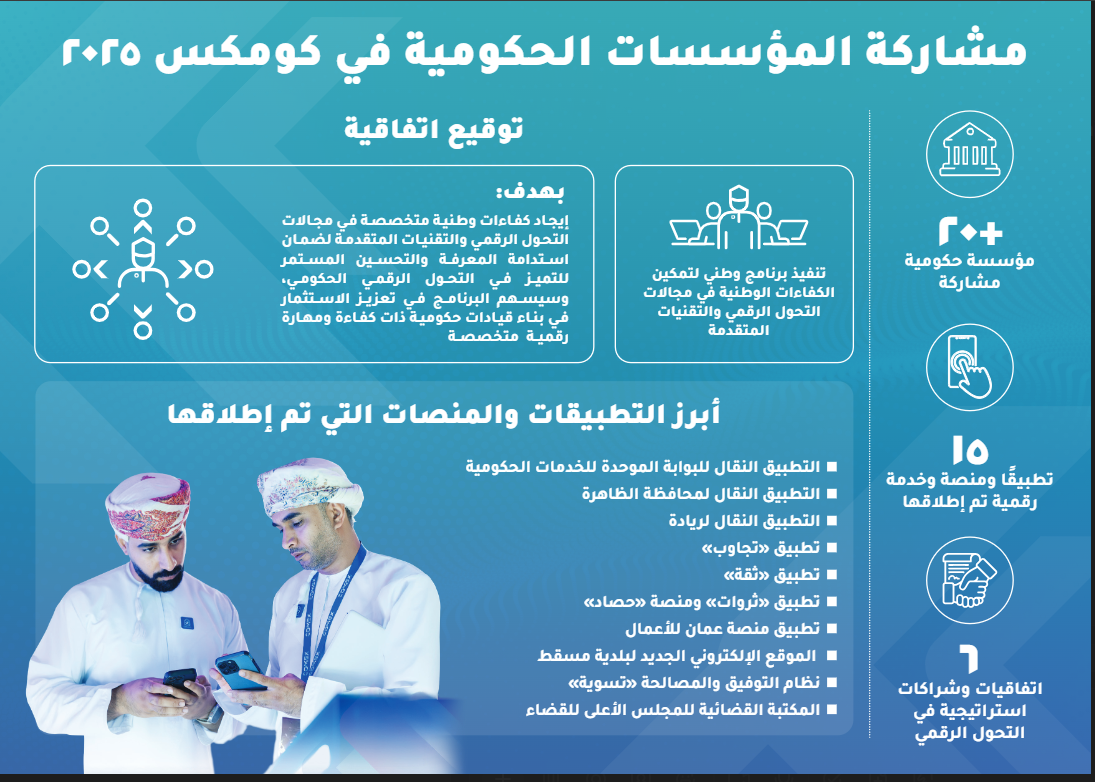
The 34th edition of the COMEX Global Technology Exhibition witnessed a strong presence from government entities, which unveiled 15 new digital applications, platforms, and services, alongside the signing of six strategic agreements and partnerships with public and private organisations. These initiatives reaffirm the Sultanate of Oman’s commitment to accelerating digital transformation and fostering innovation across government sectors, in line with the aspirations of Oman Vision 2040.

The Ministry of Transport, Communications and Information Technology launched the mobile application for the Unified Government Services Portal and its smart assistant, in addition to the “Thiqa” application, which provides a secure digital identity for trusted access to a wide range of platforms and services. The Small and Medium Enterprises Development Authority introduced the “Riyada” mobile application, enabling entrepreneurs to easily access its services. The Ministry of Interior launched the “Taswiah” Conciliation and Mediation System, providing access to all committee services through a single electronic platform. The Ministry of Agriculture, Fisheries and Water Resources rolled out the “Tharawat” application for its digital services, along with the internal “Hasad” platform for its employees.

To enhance community engagement, the “Tajawob” application was launched to receive suggestions, complaints, and reports related to government services with the aim of improving service quality. The Ministry of Commerce, Industry and Investment Promotion introduced the Oman Business Platform for business transactions. The Supreme Judicial Council launched the Digital Judicial Library to improve access to rulings, laws, and judicial principles, while Muscat Municipality unveiled its new website to provide integrated online services.

The Ministry of Finance introduced a dedicated electronic payroll transfer platform. Al Dhahirah Governorate launched its mobile application and showcased innovative projects at COMEX, including a smart municipal vehicle, the Al Dhahirah Digital Twin, a drone project for project monitoring, a smart abattoir monitoring system, awareness tools using augmented reality glasses, and smart municipal inspection glasses. The Telecommunications Regulatory Authority presented three systems: Number Portability, Telecom Licensing, and the Best Package system.

On the agreements front, the Ministry of Transport, Communications and Information Technology signed an agreement with Bahwan CyberTek, in partnership with the Royal Academy of Management, the University of Technology and Applied Sciences, and the Oman Society for Human Resource Management (OSHRM), to implement a national programme for developing Omani talent in digital transformation and advanced technologies.

The Environment Authority signed three strategic contracts covering: the development of a core services system to enhance the digital user experience and raise beneficiary satisfaction, the creation of a national system to manage and track radioactive sources and nuclear materials, and the establishment of a system for planning and managing the Authority’s resources, assets, processes and internal services.

The participation of government entities at COMEX highlighted an integrated platform for showcasing advanced digital solutions and establishing strategic partnerships that contribute to advancing Oman’s digital transformation journey and strengthening the Sultanate’s position in the global digital landscape.

Governorate Digital Transformation Ambassadors Make a Distinguished Presence at COMEX 2025

Embodiment of the Community Partnership Approach. Governorate Digital Transformation Ambassadors Make a Distinguished Presence at COMEX 2025

September, 2025

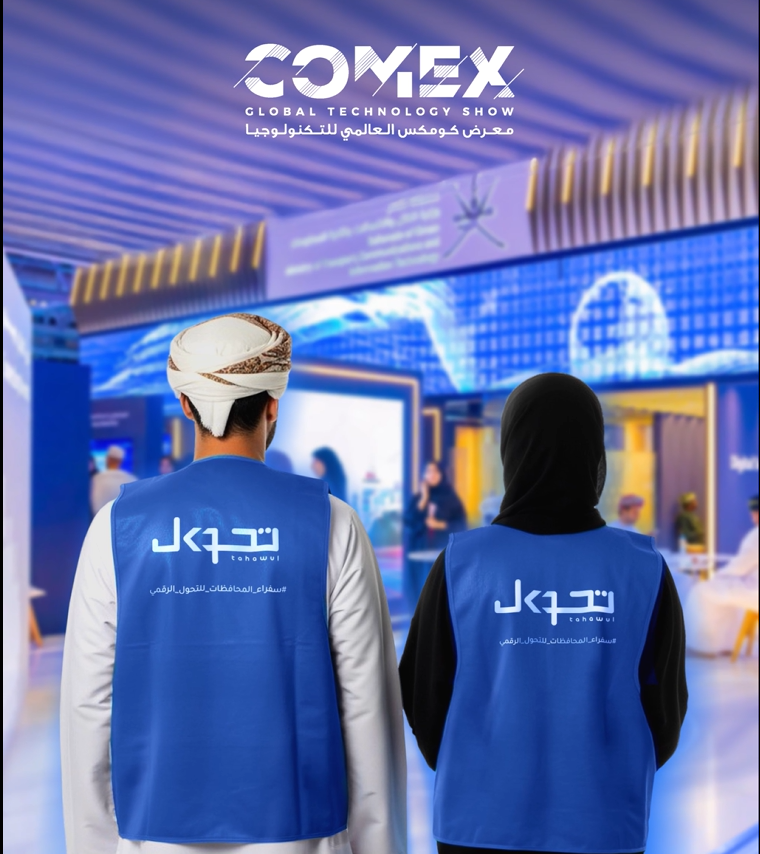
Muscat, September 2025 – In a technological landscape where innovations compete and advanced digital solutions converge, the National Programme for Government Digital Transformation “Tahawul” marked a prominent presence at the COMEX Global Technology Exhibition 2025 through the initiative “Governorate Digital Transformation Ambassadors”. This participation reflects the programme’s vision of positioning citizens as key partners in building the digital future and demonstrates an advanced model of integration between government and society to enable transformation in public services.

During the exhibition, the Tahawul team conducted a wide range of activities and events. The Governorate Digital Transformation Ambassadors focused on introducing and promoting government digital services, providing visitors with comprehensive briefings on the developed platforms, applications, and digital systems, and demonstrating how these tools can simplify procedures and enhance service quality. The Tahawul team also organised guided tours for the ambassadors within the exhibition halls to introduce them to participating institutions, highlighting the added value the ambassadors provide as a link between society and government entities—not only during the exhibition but also through ongoing initiatives across the governorates in the future.

Tahawul further added an interactive dimension by organising specialised competitions for visitors, enriching audience engagement and creating a vibrant atmosphere that fostered interaction with digital solutions and reinforced the culture of digital transformation within the community.

Believing firmly in the principle of listening to the community’s voice, the National Programme for Government Digital Transformation implemented a comprehensive survey on digital transformation to assess beneficiaries’ awareness and satisfaction with government digital services, alongside conducting direct interviews with visitors to capture their impressions and receive development suggestions. This approach underscores the commitment to building more efficient services that meet citizens’ aspirations.

Saeed bin Hamoud Al Badi, Digital Transformation Ambassador for North Al Batinah Governorate, stated that the ambassadors’ participation in COMEX 2025 serves as a leading platform to bridge government and society. He highlighted that the ambassadors introduce the public to government digital services, while also conveying opinions and feedback to relevant authorities to improve service quality and enhance its reach and efficiency. He added that their participation aims to support government institutions, promote and raise awareness of digital services, and act as an effective link between the authorities and society. Al Badi further noted that the initiative included the launch of the project “La Tata’ana”, which features video clips from institutions highlighting digital services, platforms, and applications to disseminate them among the community, serving as a reliable guide and reference for digital services and contributing to enhancing digital knowledge among citizens.

Meanwhile, another Governorate Digital Transformation Ambassador commented: “We are proud, as representatives of the Governorate Digital Transformation Ambassadors, to showcase the digital achievements of several government institutions to the public, alongside the commendable accomplishments of other participating start-ups. My participation in COMEX was also an exceptional opportunity to introduce the governorate’s smart projects and contribute to raising public awareness about the importance of digital transformation. As young people, we are all invited to support these efforts and work on developing innovative projects that help position the Sultanate of Oman as a global leader, in alignment with Oman Vision 2040.”

It is worth noting that the “Governorate Digital Transformation Ambassadors” initiative was launched by the Ministry of Transport, Communications and Information Technology, represented by the National Programme for Government Digital Transformation “Tahawul”, aiming to empower a distinguished group of national competencies, experts, technologists, and digital activists with passion and knowledge in the field of digital transformation across all governorates. The initiative seeks to raise community awareness of smart and advanced digital services and solutions, promote their optimal use as best practices for accessing government services, and enhance overall citizen satisfaction.

The initiative also aims to highlight the latest digital technologies, such as electronic authentication and signatures, digital payments, smart applications, artificial intelligence, and other tools that equip the community to interact effectively with the demands of contemporary digital life.

Centred on innovation and sustainability

Centred on innovation and sustainability 25 Projects 100% Completed, 11 Advancing at 80% under the National Digital Transformation Programme, Tahawul

October 25, 2025

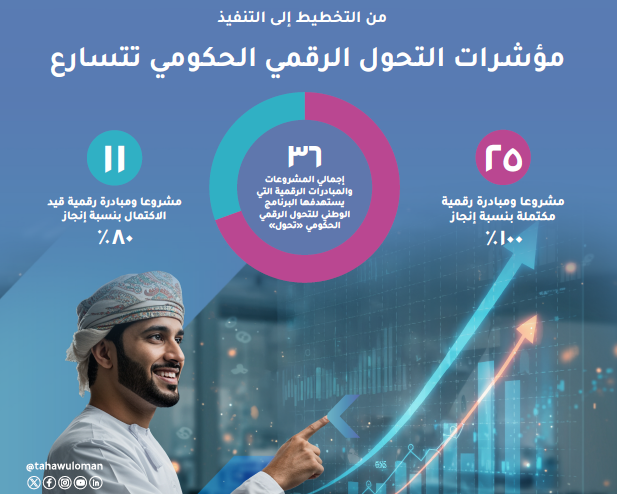
The Ministry of Transport, Communications and Information Technology, through the National Programme for Government Digital Transformation, Tahawul, has announced the successful completion of 25 digital projects and initiatives, representing full implementation out of a total of 36 projects targeted by the programme. In parallel, work is ongoing on 11 additional projects and initiatives, which have reached an average progress rate of 80%. This milestone highlights the programme’s ambitious efforts to digitalise government services, simplify procedures, strengthen digital governance and accelerate service delivery to improve the user experience. These efforts align with the national priorities outlined in Oman Vision 2040.

Among the completed projects are the Unified Government Services Portal and its mobile application, which serve as a single access point for beneficiaries to obtain government services without the need to navigate multiple platforms or websites. The list also includes the National Open Data Platform, which offers seamless access to a wide range of datasets from government entities to promote transparency and support innovation. Other completed initiatives include the Digital System for Measuring Readiness and Digital Service Maturity, the National Digital Trust Services Project (Thiqah), which delivers a suite of authentication services such as the digital ID, electronic signature and digital seal and the project to simplify and re-engineer government service procedures, designed to optimise processes for faster, more efficient service delivery. The development of the Central Smart Chat Platform also features among the completed initiatives.

The programme has further delivered the Strategic Partnership Project for Implementing Government Digital Transformation, which focuses on advancing entities’ transformation through flagship digital projects supported by public-private collaboration. Additional completed projects include the establishment of the National Records Centre, which integrates government databases to ensure data quality and the development of a comprehensive Change Management Strategy to support the adoption of a digital-first culture and drive performance improvement. Also completed are the Guideline Framework for Government Digital Transformation, which outlines best practice implementation, the Guideline Framework for Digital Service Design and the Guideline and Activities for E-Participation.

The implementation of the Governorate Ambassadors for Digital Transformation has also been completed. This initiative aims to raise digital awareness, expand public understanding of digital services and empower communities to use digital tools more effectively. Other completed milestones include the classification, indexing and management of government services; the rollout of the Digital Content Strategy for the Unified Government Services Portal; the development of government mobile and smart applications and enhancements to e-participation tools.

Tahawul has also concluded the Development and Enablement of Core Central and Shared Digital Solutions Project, the National System for Planning, Evaluation and Performance Monitoring, the Unified National Email Platform for Managing Electronic Transactions and the Digital Government Business Continuity Initiative. Furthermore, it has completed the Innovation in Shared Digital Solutions and Systems Project, the Oman Digital Transformation Forum Initiative and the development of the Guideline Framework for Implementing Government Digital Transformation Projects.

Eng. Abdulaziz bin Abdulrahman Al Kharousi, Director General of Digital Transformation and Sector Enablement at the Ministry of Transport, Communications and Information Technology, said, “The completion of these digital projects and initiatives marks a key milestone in Oman’s digital transformation journey. It reflects the commitment of Tahawul to reshaping the user experience and boosting government performance. These projects have enhanced transparency, strengthened digital governance and enabled citizens and residents alike to access digital services easily and securely. In doing so, they help build trust in the national digital ecosystem and strengthen Oman’s standing in global e-government and digital competitiveness rankings.”

He added, “Tahawul continues to progress with confidence, investing in strategic projects that serve as key enablers of digital transformation. These efforts enhance government efficiency, reinforce Oman’s commitment to innovation and sustain digital growth as well as position the country as a leader in the global digital economy.”

As of the end of May 2025, the National Programme for Government Digital Transformation had achieved an overall performance improvement of 80%. A total of 381 shared services were streamlined through Manjam Labs and 16 complete beneficiary journeys were designed from start to finish. Of the priority services identified, 96% had their procedures simplifie and 74% were fully digitalised. Between January and May 2025, 11.4 million digital transactions were processed across 48 government entities. The programme also oversaw the launch of a range of smart platforms, digital portals and applications.

As part of its contribution to decentralisation, the programme has strengthened the digital infrastructure across all governorates in the Sultanate of Oman. This includes the launch of dedicated websites for each governorate and improvements to the Injaz platform for the delivery of health and technical services. It has also driven innovation through the development of new digital solutions, including the electronic conciliation and mediation system “Taswiah”, the Smart Hat Project to improve remote communication and municipal services in South Al Sharqiyah and Internet of Things (IoT)–based smart lighting management systems in South Al Sharqiyah and Musandam. Other notable initiatives include the development of smart inspection glasses and AI-powered slaughterhouse monitoring in Al Dhahirah, the use of drone and AI technology to track construction progress in Al Dakhiliyah and the Satellite and Artificial Intelligence Project for analysing urban and environmental data in South Al Sharqiyah.

The programme has also issued a comprehensive suite of frameworks to guide digital transformation. These include the Regulatory Framework for Government Digital Transformation, the National Data Governance and Management Framework, the Digital Transformation Project Management Guide, the Digital Community Participation Guide, the Digital Accessibility Guide, the Digital User Experience Guide, the Mobile Application Development Guide for Persons with Disabilities, the General Policy for the Safe and Ethical Use of Artificial Intelligence Systems and the Strategy and Framework for Change Management.

Tahawul continues to serve as a key enabler of digital transformation in Oman, driven by innovation and agility to ensure the sustainability of digitalisation. It follows an institutional approach that delivers a seamless user experience through simplified processes and accelerated service delivery.

Reflecting a unified effort across government entities to reinforce smart government and improve service quality

Reflecting a unified effort across government entities to reinforce smart government and improve service quality

October 23, 2025

North Al Batinah and Al Dhahirah Governorates Record Strong Progress in Digital Transformation Indicators in H1 2025

Over 96,646 government transactions were completed digitally in North Al Batinah Governorate by the end of June 2025

Nine key services were digitalised in Al Dhahirah Governorate, resulting in 13,931 digital transactions completed within six months

North Al Batinah and Al Dhahirah governorates continued to advance their digital transformation efforts in the first half of 2025, achieving measurable progress through expanded digital services, smart solutions and improved institutional performance efficiency through service digitalisation and process simplification for beneficiaries. These developments are part of the National Programme for Government Digital Transformation, Tahawul, and reflect the growing impact of digitalisation in enhancing government service delivery at the governorate level.

Digital Transformation in North Al Batinah

Eng. Salem bin Hamad Al Kindi, Head of the Digital Transformation Team in North Al Batinah Governorate, stated that the governorate recorded a significant leap in digital transformation indicators, with more than 96,646 transactions completed through digital channels by mid-2025. This reflects the success of ongoing efforts to enhance government service systems and improve the user experience.

Al Kindi noted that several key digital projects have been implemented, including the launch of the governorate’s official website, offering centralised access to core services; a document and records management system to improve data handling and retrieval and a cloud-based file sharing platform to ease access to shared resources.

Further initiatives include the “Athar” performance excellence system to support innovation and results-driven work; the Sohar Municipality digital services platform offering a range of services under a unified interface; the “Estebyan” platform for managing and analysing surveys and the Marriage Fund application system enabling digital benefit requests. Additional developments include a digital portal for summer centre registrations and programme listings, a digital attendance system to strengthen workplace discipline and the completion of phase one of the governorate’s network infrastructure upgrade.

Al Kindi added that digitalisation has transformed several key government services, accelerated procedures and reduced administrative burdens. Services now available through digital channels include the issuance of administrative circulars and decisions, digital processing of document transfers and disposal, cloud access to shared files, Marriage Fund benefit requests, official mission and leave requests, lease registration and amendments, building permits and the renewal or cancellation of temporary municipal licences.

Qualitative Digital Initiatives in Al Dhahirah

Salem bin Ali Al Mahrouqi, Head of the Executive Digital Transformation Team in Al Dhahirah Governorate, affirmed that the governorate maintained strong momentum in its digital transformation agenda throughout the first half of 2025. Efforts focused on improving service quality and delivery through smart projects and targeted initiatives, resulting in 13,931 digital transactions completed during the period. This reflects the advancement of digital infrastructure and growing adoption of digital channels.

He highlighted that nine essential services were digitalised through the governorate’s digital portal. These include requesting a meeting with an official, applying for a winter camping site, requesting site inspection for a mobile café, requesting pest control services, requesting public site cleaning, accessing support from the Marriage Fund, receiving official correspondence electronically through Walis’ offices, applying to invest in land or sites (governmental or private) and submitting student training requests.

He further outlined several digital projects launched between January and June 2025. These include the Innovation Management System, aimed at embedding innovation within the work environment and improving public service delivery and satisfaction; the beta version of the Al Dhahirah app, offering a unified access point to governorate services and the AI-powered Municipal Slaughterhouse Monitoring Project, supporting health and inspection quality.

Additional smart initiatives include a sensor-equipped municipal vehicle to improve field service delivery, smart inspection glasses using AI to enhance inspection efficiency, the Smart Municipal Awareness Initiative to promote digital literacy in the community, the Al Dhahirah Digital Ambassador Initiative to raise awareness of the governorate’s vision in engaging ways, and the Digital Twin Project, which employs spatial technology to support decision-making and urban planning.

These achievements reflect the impact of coordinated efforts across governorates under the National Programme for Government Digital Transformation (Tahawul), which seeks to improve the quality of government services, reinforce the concept of smart government, and increase beneficiary satisfaction through faster, more transparent and accessible services.

Under the national visions of the National Programme for Government Digital Transformation

Under the national visions of the National Programme for Government Digital Transformation

November, 2025

Muscat and Al Dakhiliyah Governorates progress in digital service enablement with over 800,000 transactions completed by October 2025 and the completion of key projects that improve performance efficiency 

November 2025, Muscat: Within the framework of the ambitious national visions led by the National Programme for Government Digital Transformation Tahawul, digital transformation across the governorates of the Sultanate of Oman is progressing with confidence and at an accelerated pace. This progress is establishing an integrated digital ecosystem that redefines the efficiency of government work, improves the quality of services provided to citizens and residents and contributes to achieving the targets that support a more connected, innovative and sustainable government.

In this journey, Muscat and Al Dakhiliyah Governorates stand out as leading examples of government digital transformation. Their accomplishments and digital projects reflect a strong investment in modern technologies and artificial intelligence, moving towards a promising digital government.

Muscat Governorate and Integrated Digital Transformation 

Dr Ibrahim bin Ahmed Al Khrousi, Head of the Digital Transformation Team for Muscat Governorate, said “During the period from January to October 2025, Muscat Governorate achieved a significant digital leap by completing 234,251 digital transactions, in addition to digitalising nine new government services”. He explained that the same period witnessed the implementation of several digital initiatives and projects. These included the completion of the first phase of advisory services for the Unified Municipal System along with the announcement of the tender for system implementation. They also included the development of the Baladiti mobile application and the Muscat Municipality website, the development of the SMS gateway and the e-payment portal, enhancements to the technologies and systems of the Muscat Call Centre, the establishment of smart mosquito traps, smart electronic traps for stray animals and modern irrigation systems.

In the field of digital service enablement, Dr Al Khrousi stated that electronic certification was activated for rental contract registration. He added that artificial intelligence technologies were adopted to monitor and issue paid parking violations, alongside the launch of the Software Incubation Environment project and the Field Inspection service in both the health and technical areas. These initiatives support digital monitoring and ensure speed of completion and accuracy of data.

Promising Digital Achievements in Al Dakhiliyah Governorate 

In Al Dakhiliyah Governorate, the digital transformation journey achieved important progress reflected in enhanced service efficiency and improved procedures. Ahmed bin Salem Al Toubi, Head of the Digital Transformation Team for Al Dakhiliyah Governorate, stated that during the period from January to October 2025, a total of 581,006 government transactions were completed digitally. He added that 15 digital projects were completed and that six others are still under implementation, along with the digitalisation of four new services within a comprehensive entity transformation plan.

Al Toubi pointed out that among the most prominent digital achievements in Al Dakhiliyah Governorate were the preparation of the Digital Transformation Plan 2026 to 2030 and the Entity Infrastructure Plan. He added that the governorate signed an agreement to monitor construction projects using drones supported by artificial intelligence and completed integration with central platforms such as Mawared Plus, Tajawob, Isnad, Tanmiya and others. The governorate also launched the Al Dakhiliyah Explorer GIS system that provides a comprehensive geographic database for visualising spatial data, analysing it and preparing maps. Additional achievements included the digitalisation of the health inspection form and the building inspection form.

Al Toubi added that the governorate also developed the e-portal and launched the Al Dakhiliyah Services application. He explained that an artificial intelligence supported technical support system was introduced to enable staff to provide remote support to departments, manage data and information technology assets more efficiently and enhance the readiness of the governorate’s digital infrastructure. The antivirus system was also upgraded to strengthen and protect the digital work environment. Key government services that were digitalised in Al Dakhiliyah Governorate include the Entrepreneurship and Innovation Award system, the application and screening service for employment vacancies, marriage fund support requests and the employee ticket booking service.

As part of efforts to enhance community digital readiness, Al Dakhiliyah Governorate launched a series of initiatives, including the Soor Cybersecurity Competition. The competition witnessed the participation of 120 contestants who were selected according to different technical levels. A complete virtual environment was created containing practical challenges that simulated ethical hacking skills, which helped participants develop their technical abilities within a safe and structured setting.

The governorate also announced the integration of its digital services into the Thiqa platform. It provides smoother and more reliable access to digital services, improves service quality and accelerates procedures. These steps form part of a comprehensive vision that supports technological innovation and develops government operations in line with community aspirations. They also contribute to building a digital environment that is more effective and sustainable.

These achievements confirm that the digital transformation journey in the Sultanate of Oman continues with confidence towards a fully integrated digital environment. This progression is reshaping the concept of government service through a connected entity system that supports the community, stimulates the digital economy and ensures that digital transformation becomes a foundation for sustainable development and a driver for greater efficiency and innovation.

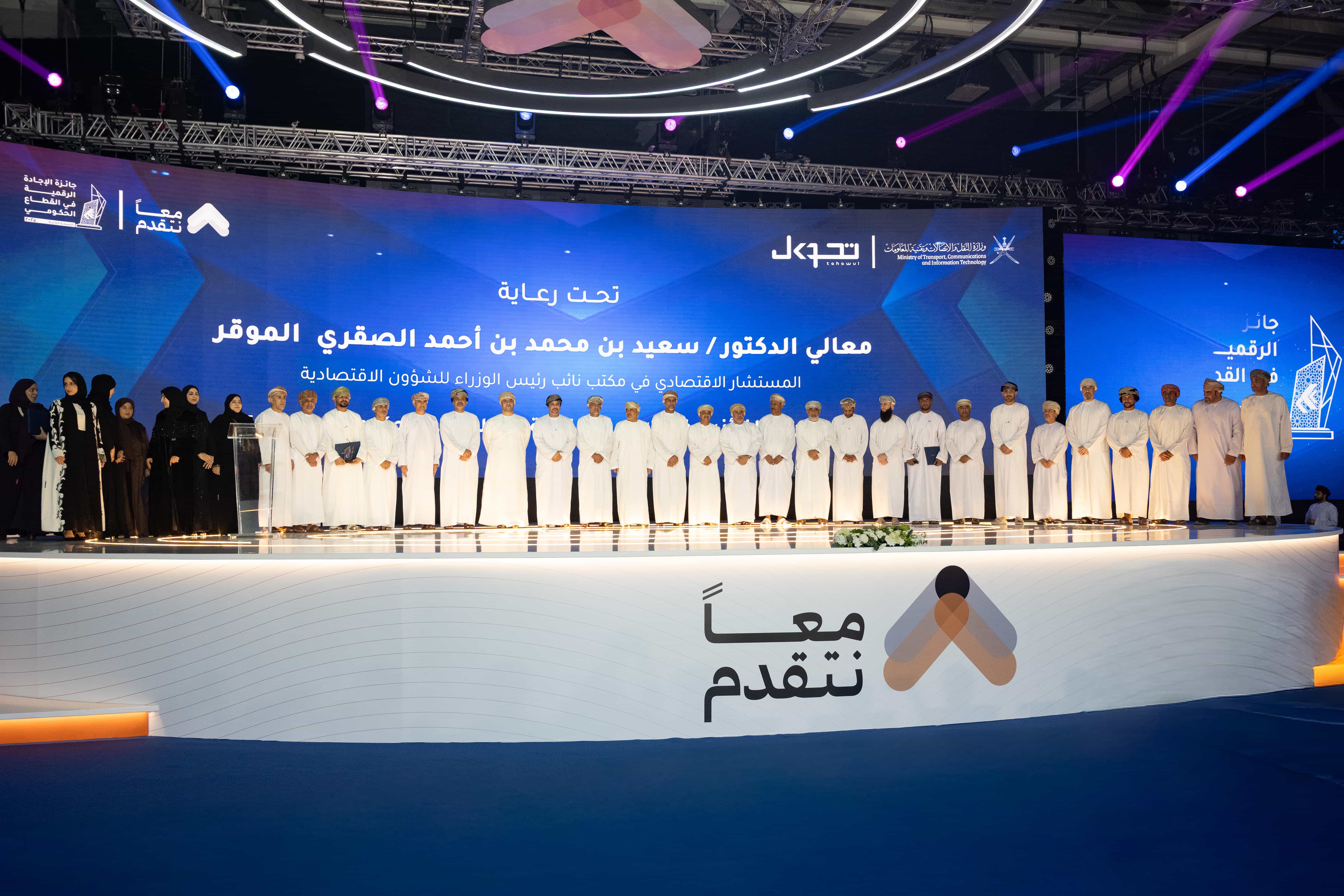
Four Main Tracks and 13 Sub-Categories Elevating the Level of Competition

Four Main Tracks and 13 Sub-Categories Elevating the Level of Competition Launch of the Second Edition of the Digital Excellence Award in the Government Sector 2025

September, 2025

The Award contributes to enhancing the quality of digital services and improving the Sultanate of Oman’s position in global indices 

The Ministry of Transport, Communications and Information Technology, represented by the National Digital Transformation Programme “Tahawul”, today announced the launch of the second edition of the Digital Excellence Award in the Government Sector 2025. The Award comes as part of celebrating national competencies and outstanding initiatives in digital transformation, reflecting a strong commitment to accelerating the pace of digital transformation and fostering innovation across the government sector. It aligns with the objectives of Oman Vision 2040 and contributes to strengthening the enablers that will raise Oman’s standing on global indicators, while embedding a culture of innovation and digital transformation to deliver more effective services that meet the needs of beneficiaries.

The Award serves as a leading platform to honour entities, initiatives, services and competencies that have excelled in digital transformation. It aims to celebrate achievements and reward distinguished government initiatives, highlighting inspiring models in digital innovation and promoting entities’ efficiency. At the same time, it seeks to encourage competitiveness, elevate the quality of digital services, stimulate efforts to develop innovative solutions for digital business environments and improve Oman’s ranking in international indicators.

Engineer Abdulaziz bin Abdulrahman Al Kharousi, Director General of Digital Transformation and Sector Empowerment at the Ministry of Transport, Communications and Information Technology, said, “The Digital Excellence Award in the Government Sector is one of the most important tools to support digital transformation strategies in the Sultanate of Oman. It goes beyond celebrating successful initiatives to encouraging entities to enhance their performance, adopt international best practices and embed a culture of change and digital excellence. The Award also fosters a spirit of healthy competition across government entities, strengthening the enablers for building a more effective, efficient and future-ready government sector. This, in turn, directly reflects on the quality of services delivered to beneficiaries and reinforces Oman’s position on global digital competitiveness indices.”

Al Kharousi added that the Award also represents a platform for showcasing pioneering experiences and inspiring success stories in digital transformation. It enables the exchange of expertise and dissemination of knowledge across government entities, driving the development of innovative solutions that respond to future needs. The Award also embodies the government’s commitment to strengthening partnership and integration among various entities and to encouraging optimal investment in national competencies.

In this year’s edition, the Digital Excellence Award in the Government Sector is distributed across four main tracks encompassing 13 sub-categories. The Entities Track recognises the Best-Performing Government Entity in Digital Transformation, Best Entity in Government IT Compliance, Best Entity Achieving a Qualitative Leap in Digital Excellence Assessment and Best Entity in Digital User Experience. The Initiatives Track awards the Best Integrated Digital Transformation Initiative, Best Initiative in Digital Community Participation and Best Initiative in Innovation and Adoption of Advanced Technologies. The Services Track honours the Best Digital Government Service for Individuals and Best Digital Government Service for the Business Sector. Finally, the Competencies Track celebrates the Best Digital Transformation Team, Best Leader in Digital Transformation and Organisational Change, Most Promising Digital Transformation Employee and Best Digital Transformation Ambassador.

The Award constitutes a key milestone in Oman’s digital transformation journey, underscoring the nation’s commitment to institutional excellence and to fostering innovation in service delivery. It supports the development of a comprehensive digital ecosystem capable of meeting the needs of society and advancing the aspirations of Oman Vision 2040 towards a sustainable and digitally empowered future.

80% of essential govt services expected to be online by 2025

80% of essential govt services expected to be online by 2025

July 26, 2025

Oman Accelerates Digital Transformation with 80% of Services Going Online

The Sultanate of Oman has decided to accelerate its digital transformation plan this year. As part of the initiative, nearly 80% of essential government services are expected to be available online in 2025. This includes the launch of the first package of priority services through the unified national portal for electronic services, as well as the introduction of a unified mobile application for government digital services.

The 2024 Annual Digital Transformation Report, issued by the Ministry of Transport, Communications, and Information Technology, revealed that the overall performance of the Government Digital Transformation Programme, Tahawul, reached 73% by the end of November 2024, up from 53% in 2023.

The average performance of government entities in meeting digital transformation requirements stood at 77%, while governorates achieved an average of 71%. These figures reflect the performance of 49 government entities and governorates assessed under the 2024 Government Digital Transformation Excellence Measurement.

A Major Leap Forward

The report highlights a significant advancement in digital transformation during 2024, with four government entities achieving the advanced level for the first time, representing 8% of the assessed entities.

These entities are Muscat Governorate, the Telecommunications Regulatory Authority, the National Centre for Statistics and Information, and the Oman Investment Authority.

Additionally, 38 entities (78%) attained the above-average level (Green), while six entities (12%) were classified at the average level (Yellow). Only one entity (2%) was rated below average (Red), with no entities classified as low-performing (Black).

The highest-performing service-oriented entities in achieving digital transformation in 2024 were Muscat Governorate, the Telecommunications Regulatory Authority, and the Royal Oman Police.

Meanwhile, the top-performing non-service entities included the Oman Vision 2040 Implementation Follow-up Unit, the National Centre for Statistics and Information, and the Oman Investment Authority, reflecting a strong commitment to digital efficiency and best practices.

Enabled for Oman Vision 2040

Engineer Saeed bin Hamoud Al-Maawali, Minister of Transport, Communications, and Information Technology, stated that the Government Digital Transformation Programme “Tahawul” (2021–2025) aligns with the government’s vision to enhance organisational efficiency, develop integrated and transparent business models, improve processes, and support data-driven decision-making.

He emphasised that digital transformation is a cornerstone of national strategies and Oman Vision 2040, which aims to foster a creative society, build a competitive economy, ensure a responsible government, and promote environmental sustainability.

The programme enhances government efficiency, streamlines procedures, improves user experience, fosters innovation, supports predictive analytics and data-driven planning, improves supply chain management, and enhances government spending efficiency. It also contributes to economic growth, investment attraction, and GDP reinforcement.

Simplification and Digitalisation of Services

Streamlining procedures and digitising government services remain central to Oman’s digital transformation efforts. According to the report, 2,680 services were simplified between 2021 and 2024, achieving 93% of the target of 2,869 services set for simplification by the end of 2025.

In 2024 alone, 481 services were simplified. Meanwhile, 1,700 services were digitised between 2021 and 2024, out of a total target of 2,523 services by the end of 2025, representing 67% progress. Of these, 355 services were digitised in 2024.

Digital Platforms

Digital platforms are a critical component of Oman’s digital infrastructure, enhancing service accessibility and improving operational efficiency. In 2024, a total of 11 government mobile applications were launched and developed.

Key platforms include Taheel by the Ministry of Social Development; the Tatwir and Amlak platforms by the Ministry of Housing and Urban Planning; and the E-Judiciary Services Portal by the Supreme Judicial Council.

The Environment Authority launched the National Air Quality Index Platform (Naqi), while the Ministry of Energy and Minerals introduced the Taqa platform. Additionally, the Ministry of Commerce, Industry, and Investment Promotion developed the Hazm and Ma'roof Oman platforms.

Electronic portals were also launched for Al Buraimi, Al Wusta, and South Al Batinah governorates.

These digital platforms play a vital role in advancing government digital transformation, reinforcing Oman’s commitment to delivering innovative, sustainable services aligned with the objectives of Oman Vision 2040.